Durian, The King of Fruits
When I was a teenager, weekends and holidays were dedicated to prayer and visiting the temple to do volunteer work. Our neighborhood temple…
When I was a teenager, weekends and holidays were dedicated to prayer and visiting the temple to do volunteer work. Our neighborhood temple sat atop the hills of East San Jose with panoramic views of Silicon Valley. The complex was once a school, and its playground was the most serene place for reflection. I used to sit on the swings looking out into the valley wondering what my future would hold, thinking about all the people who lived their lives the way they wanted, unlike me. My life always seemed on hold. I often asked myself, “When will my life start? When will I not have to do my parents’ bidding? When can I be me?” It wasn’t until very recently that I felt free to be myself, and this blog is my way of finding the voice I’ve long suppressed.
It was at this Chinese Buddhist temple, Gold Sage Monastery, where I ran in its breezy halls, translated lectures about sutras, knelt and bowed to monotonous chants, taught tai chi, and made lifelong friends. It was also where I had my first taste of durian.
Durian is not for the faint of heart. It evokes strong feelings, either for or against it, but you can never be indifferent to durian. It was a warm, sunny summer day when it first entered my world. Lunch was served in the dining hall, but this day was special because someone had brought fresh durian to share. Mind you, this was in the 1990s, so I have no idea how they procured this disconcerting fruit native to Southeast Asia. Someone thought it would be a treat for everyone, except durian is never loved by all.
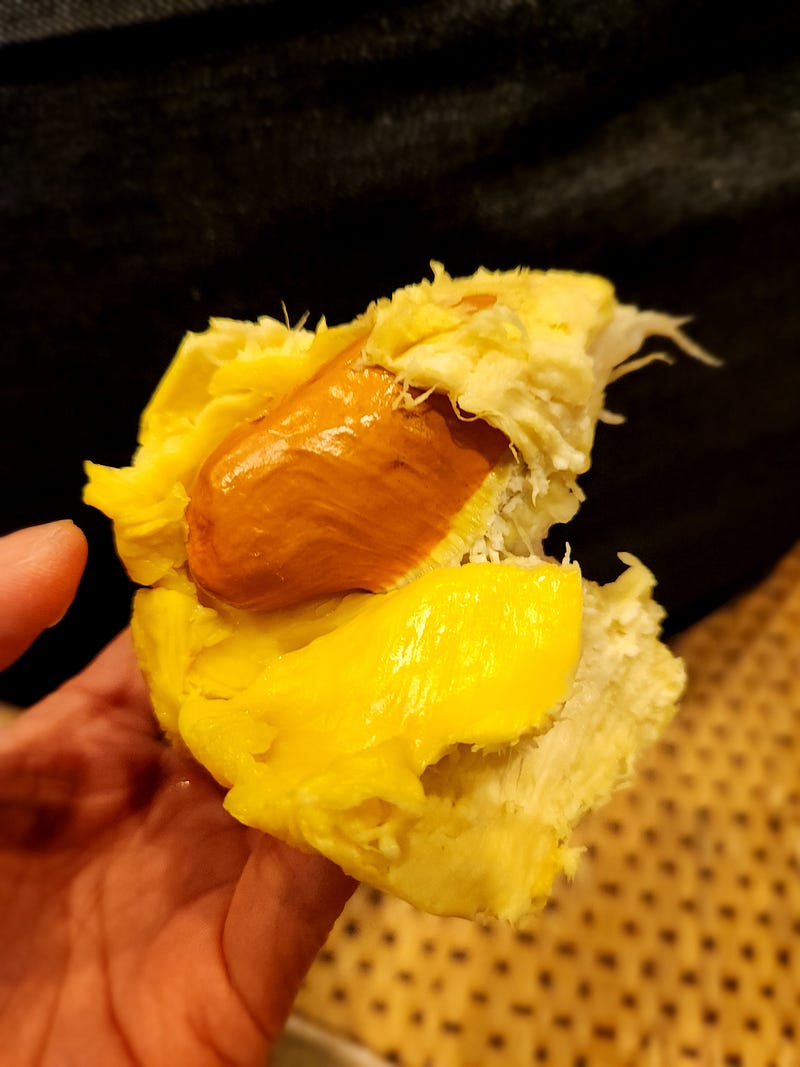
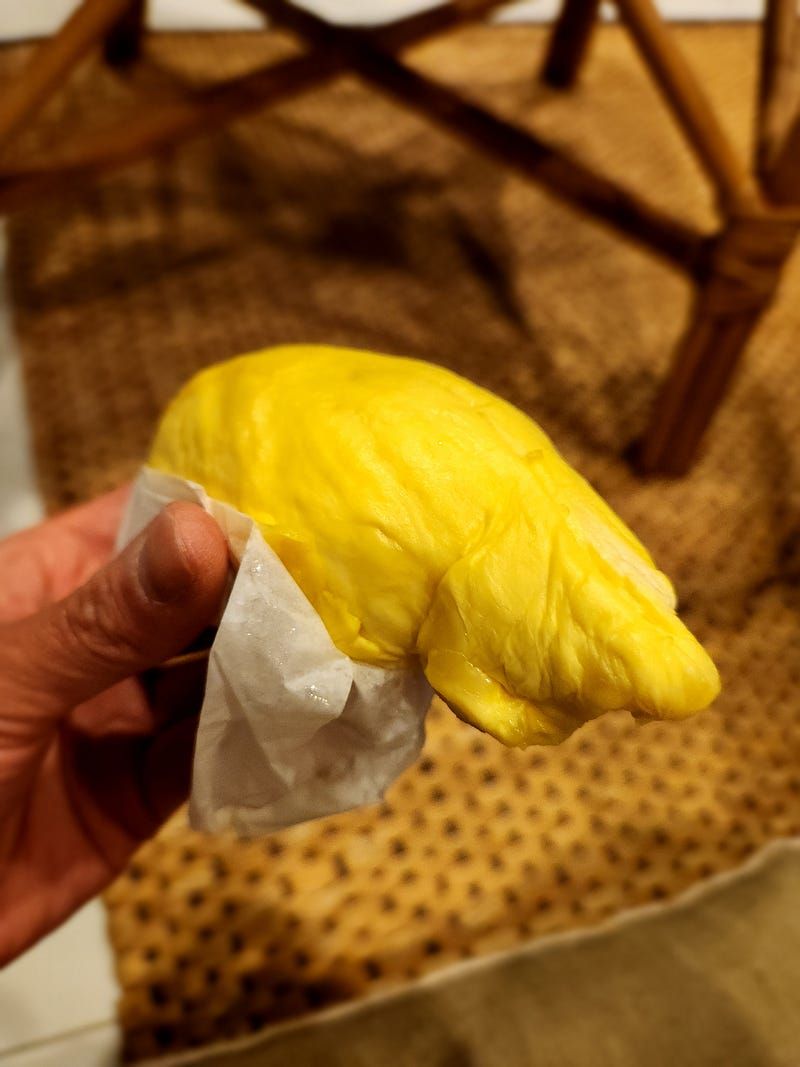
The name durian is derived from duri, the Malay word for thorn, which aptly represents the prickly rind that encases its sweet, buttery-smooth, pale yellow flesh. I would describe the taste of it like a sweet avocado. It’s quite tasty and delicious, but taste is not why it gets a bad rep. Its notoriety comes from how it greets your nose. Some would describe its strong odor as a gas leak or rotten eggs, which unfortunately, I think are unfair exaggerations. However, I won’t deny that it’s not the most desirable smell for a fruit. Many buildings in Southeast Asia prohibit the consumption of durian inside, as its scent can permeate the whole room and linger for days.
Among my friends, none of us had ever tried durian before, but the stench was nauseating. Even with all the windows and doors open in the dining hall, the smell seemed to radiate within a five yard radius. Since no one was willing to try the fruit and report back (we huddled outside, unable to handle the concentrated whiffs of durian), I decided that I would brave the smell and at least taste the fruit that some of the adults seemed to be enjoying; my curiosity was killing me. With my nose pinched and my breath held, I placed a piece of durian in my mouth and chewed awkwardly. It tasted like a creamy custard! I was so surprised, but the pleasantry didn’t last. As soon as I took my first breath, the offensive malodor permeated through my nasal passages almost to the point of knocking me unconscious.
From that moment forth, I had respect for the durian, king of fruits. I knew that it tasted good, and for those who could stand its “fragrance,” well, good for them. For us plebeians, I stayed away from it until decades later, when I visited Bangkok.
Bangkok is an amazing country. The Thai food is world-renowned, and the supermarkets here are world class. One in particular blew my mind: Gourmet Market at Siam Paragon. There is no other supermarket in the world that can compare. It’s not just because of its size, which is as deep as it is wide. It’s the sheer variety of products from all over the world. You can get Emmental gruyere cheese from Switzerland or cultured butter from France or Manuka honey from New Zealand or five grades of Kobe beef from Japan. The entire produce department is like entering the Cave of Wonders. You’ll find the most beautiful mangos, but not just one type of mango, a dozen varieties of mangoes! There are endless aisles of fresh produce with exotic vegetables I’ve never seen before. The quantity of high-quality ingredients is staggering. It would take you days to peruse, like the Louvre of supermarkets.

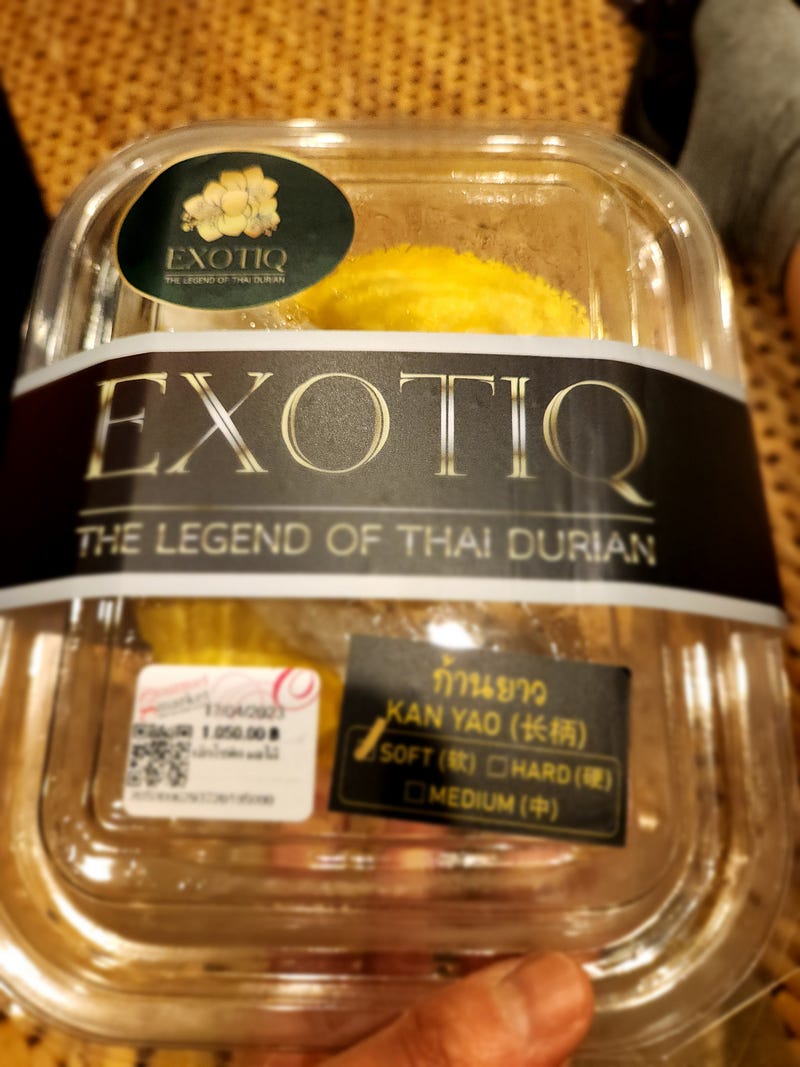
In the fresh fruits department, several stalls handed out samples of fresh durian. I decided that if there’s anywhere to try durian, it had to be in Thailand, where they grow over 300 varieties of this royal fruit. I just thought there had to be a reason why it’s so beloved. So without knowing a word of Thai, I simply picked the most expensive durian to try, hoping that price would at least point me in the right direction.
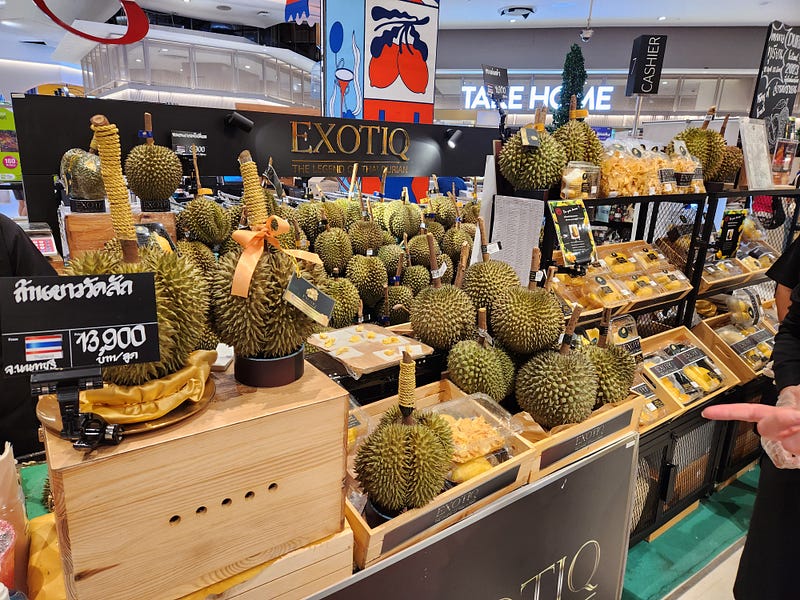
This strategy did not disappoint. The durian I tasted was a revelation. I officially love durian now. I wouldn’t characterize the smell of this finer specimen to be desirable or pleasant, but it wasn’t nearly as offensive as the usual durian I’ve encountered. I learned that it doesn’t have to smell like sweaty socks from the gym. It can be muted, more subtle and nuanced. One can even learn to like the smell. And being the weird person that I am, who loves natto (Japanese fermented soy beans also known for its stinkiness), I know this is a fruit I can come to love. So for the first time in my life, I purchased durian to enjoy at home!
This whole experience taught me that you can’t write off any food after only trying it once. With an open mind, you can come to enjoy it. Stinky, prickly appearances, notwithstanding.