Jajang Myeon (자장면)
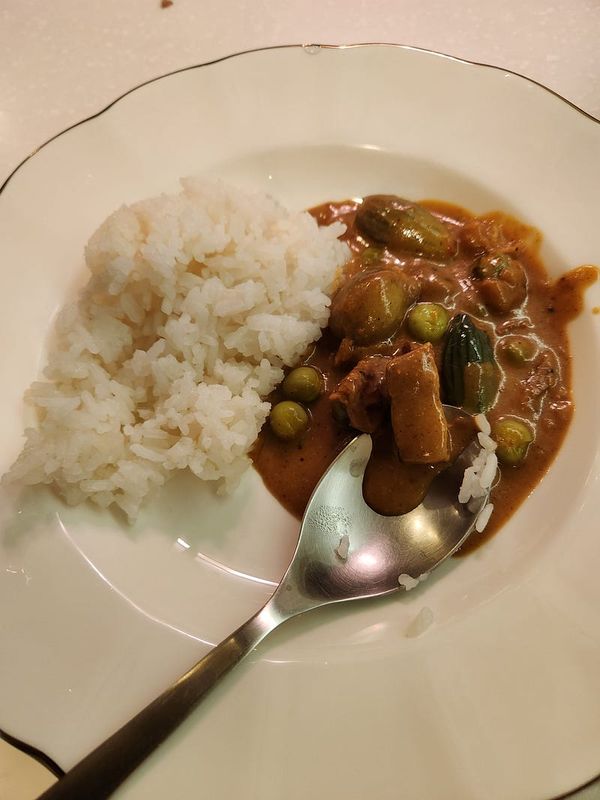
At first glance, this dish does not look remotely appetizing. It reminds me of Italian squid ink pasta. Something about black or super dark…
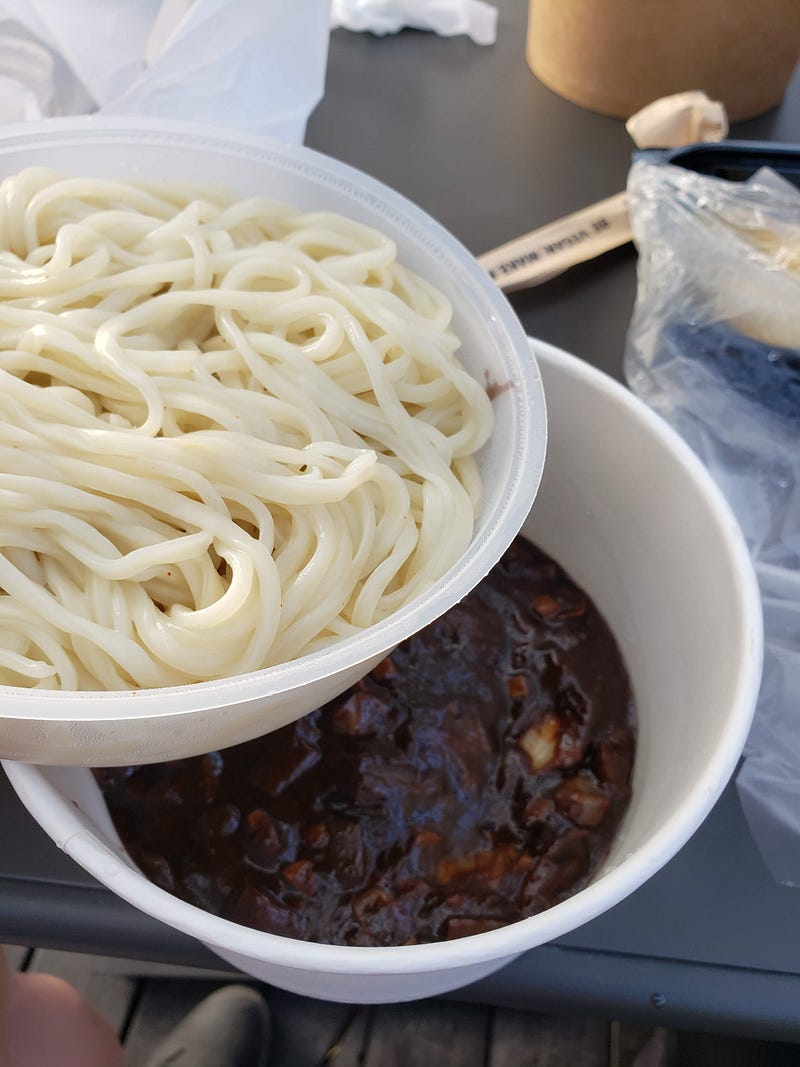
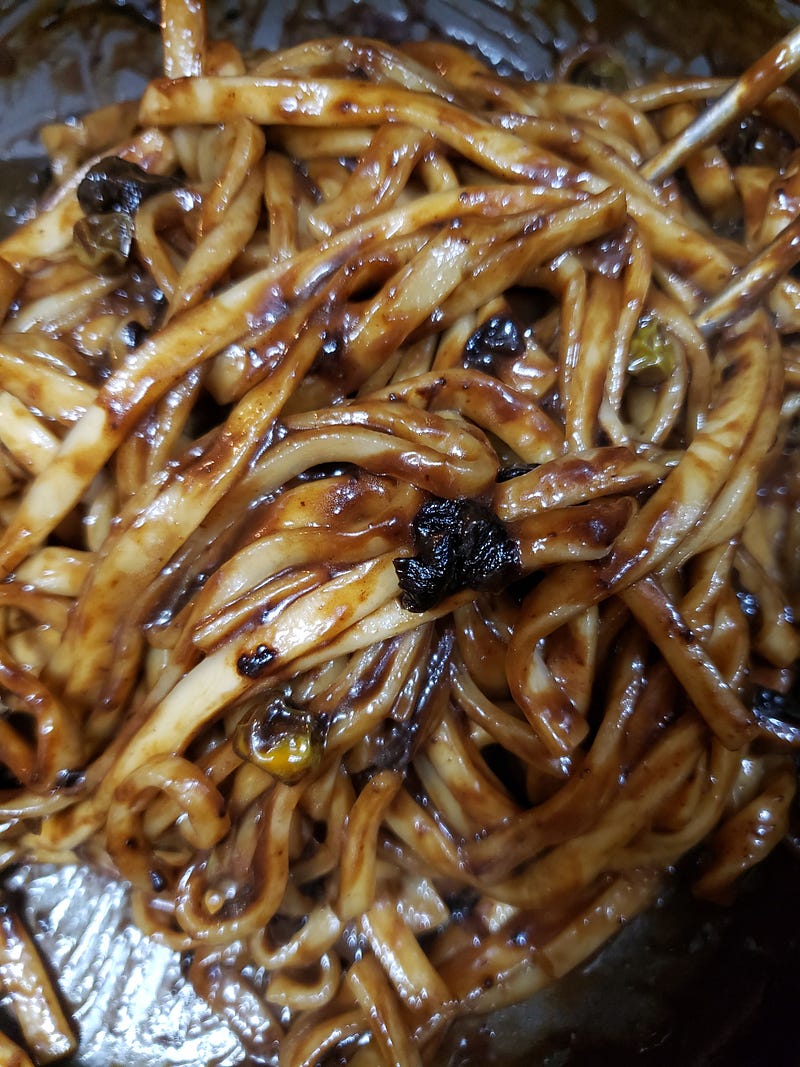
At first glance, this dish does not look remotely appetizing. It reminds me of Italian squid ink pasta. Something about black or super dark brown just doesn’t seem edible to me (okay, chocolate is an exception). Yet, it’s the most popular dish in Korea. Inspired by zhajiang mien (炸酱面) from China–-which literally means “fried sauce noodles,” the Korean variation is much sweeter. I’ve only tasted instant jajang myeon from Asian supermarkets in northern California. So, while I’m here in Seoul, I tried my hand at making it from scratch.
You never have to make your own noodles here. Fresh noodles in Korea are beyond reproach. Cooked properly, they have enough chew to satisfy any noodle lover. All I had to do was make the sauce.
Jajang sauce in Korea is different from the Chinese fermented black bean sauce for zhajiang mien. It is a smooth puree that comes in a plastic bag rather than a chunky sauce with whole beans in a glass jar. I decided to follow Hooni Min’s recipe from his cookbook, My Korea, because I can’t go wrong with a Michelin starred chef. His recipe requires patience. The jajang sauce is slowly cooked in half a cup of oil to bring out its sweetness. Having tasted the before and after, this step is crucial. It really mellows out the flavor of the jajang.
Instead of kogi (고기, or meat), I used mushrooms, Korean zucchini, and peas, along with the usual garlic and onion. The sauce is quite thick, so it is thinned with a dashi broth (made by pouring hot water over dried shiitake and kelp) and soy sauce. Finally, you’ll want to sweeten it to taste. I find that it needs additional sweetness to match the Korean standard. I’ve been using erythritol, a great sugar substitute.
The resulting dish is nothing like the instant jajang myeon I’ve previously had. It has a depth of flavor that is hard to describe. It is unctuous, but not in an overly rich way. It’s mild flavor means it’s a comfort food that can be eaten often without ever getting tired of it. It’s easy to see why it’s so loved in Korea!