Northern India: Punjab
For many Americans, the thought of visiting India is exotic and a little scary. You might enjoy delicious ethnic cuisine, but you might…
For many Americans, the thought of visiting India is exotic and a little scary. You might enjoy delicious ethnic cuisine, but you might also contract something horrible resulting in multiple trips to the bathroom. Regardless of what you think traveling to India would entail, there’s one thing that you’re guaranteed to do: Visit the Taj Mahal.
Now, having been to the Taj Mahal, I agree that it’s worth visiting. Its gorgeous marble construction and rich history is a sight to behold in person, but it’s not the number one destination in India on my list.
The Taj Mahal is a victim of its own success. Due to its colossal popularity, it attracts seven to eight million visitors annually (putting it on par withthe Louvre). The sheer number of visitors on any given day ruins the atmosphere of the beautiful grounds. The swindlers and con artists also take advantage of this volume of visitors. Without knowing who to trust, walking on the streets around the Taj Mahal, which would’ve been fun and enjoyable, becomes a gauntlet you must traverse just to get to the entrance of the gardens.
Instead, if you asked me to recommend one place in India to visit, I would tell you to go to Amritsar.
Amritsar is a city of about 2 million people located in the northern state of Punjab about 30 kilometers from Pakistan. Punjab is known for its butter and famous for its dishes made with copious amounts of it, like chicken makhani or dal makhani (makhani literally means butter!).
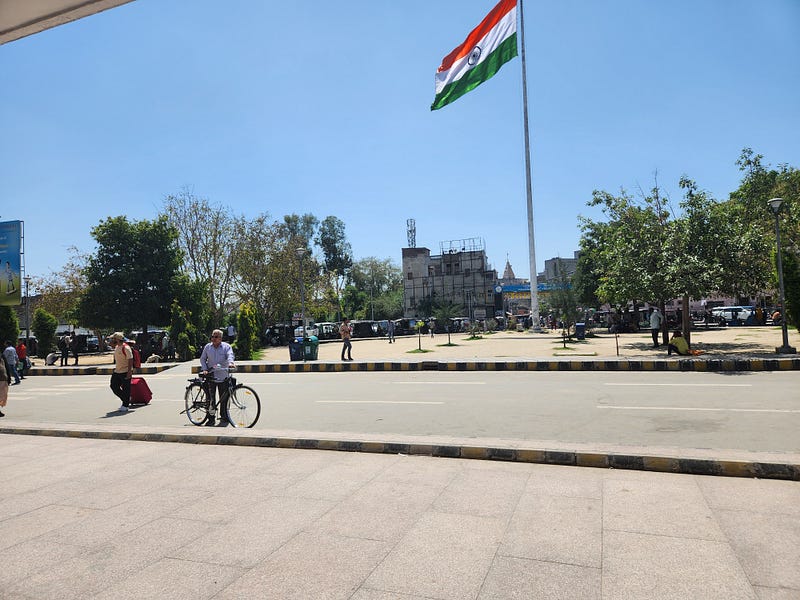
We started our trip into Punjab in Jalandhar (80 kilometers southeast of Amritsar), arriving by train from Delhi. Immediately, we noticed a slower pace at the Jalandhar train station. Gone was the intense noise and bustle from Delhi, though this also meant our transportation options were more limited. After some haggling, we managed to find a taxi large enough to fit our luggage. Taxis in India were usually small, beat-up Suzuki compact cars, so even traveling light meant we needed some creativity to load all of our luggage.
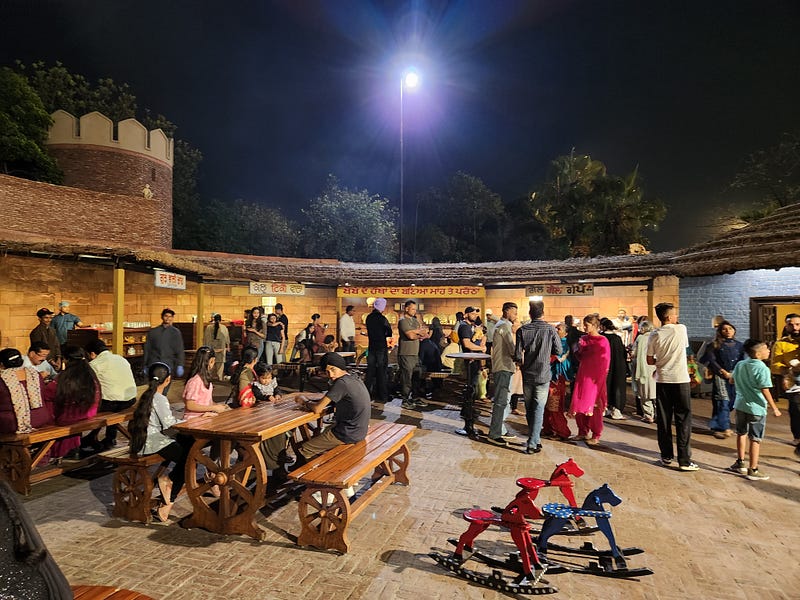
The night we arrived, our friends took us to a Punjabi-themed village called Rangla Punjab, a small amusement park showcasing the culture and cuisine of Punjab. As we entered, I was overloaded with sensory inputs — loud Punjabi music, chattering crowds, tantalizing fragrances from food stalls, and more. It was like the Disneyland of all things Punjabi. Despite all the hustle and bustle, we were transported in time to a simpler way of life, where grandmothers churned butter, spun yarn, and wove rugs.
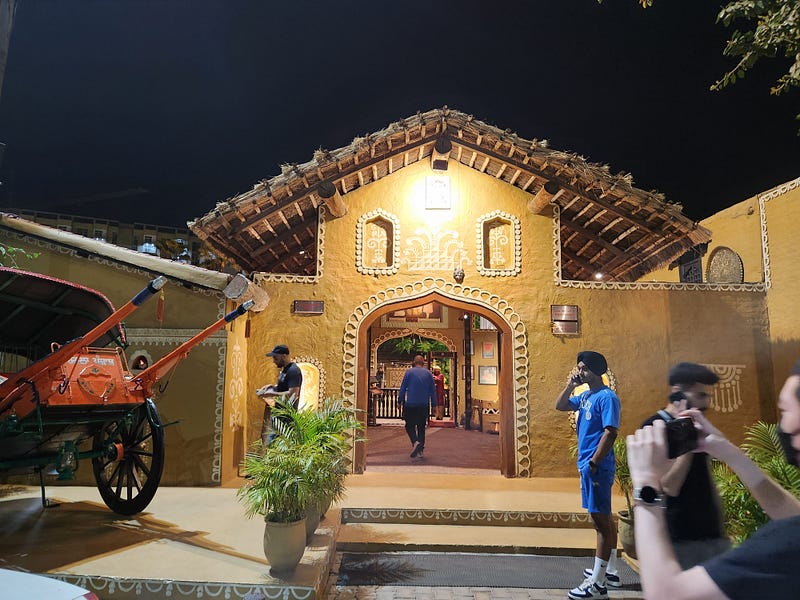
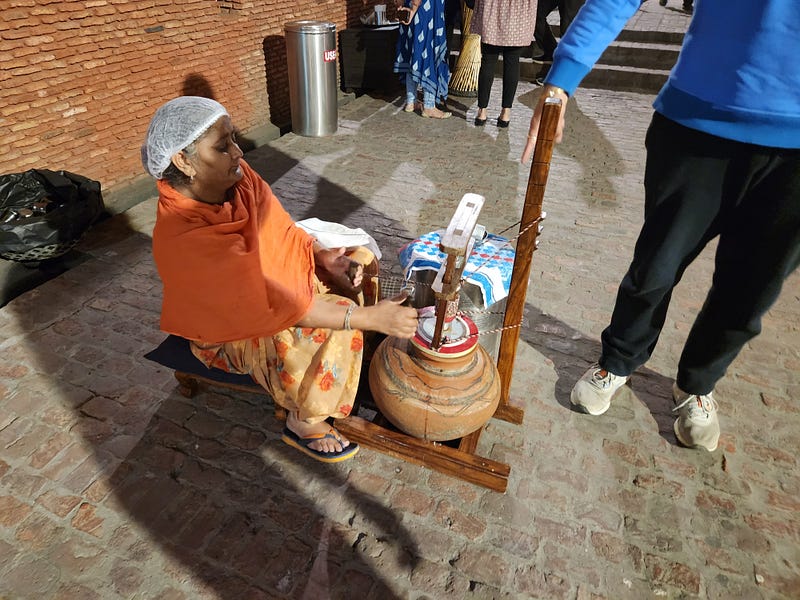
I could have stood there taking my time to soak it all in, but we had reservations for a traditional Punjabi dinner in a restaurant within the park. Inside the restaurant, I couldn’t help noticing the colorful traditional Sikh (one of the dominant religions in this area) attire worn by one of the staff, complete with a kirpan (a curved sword) by his side.
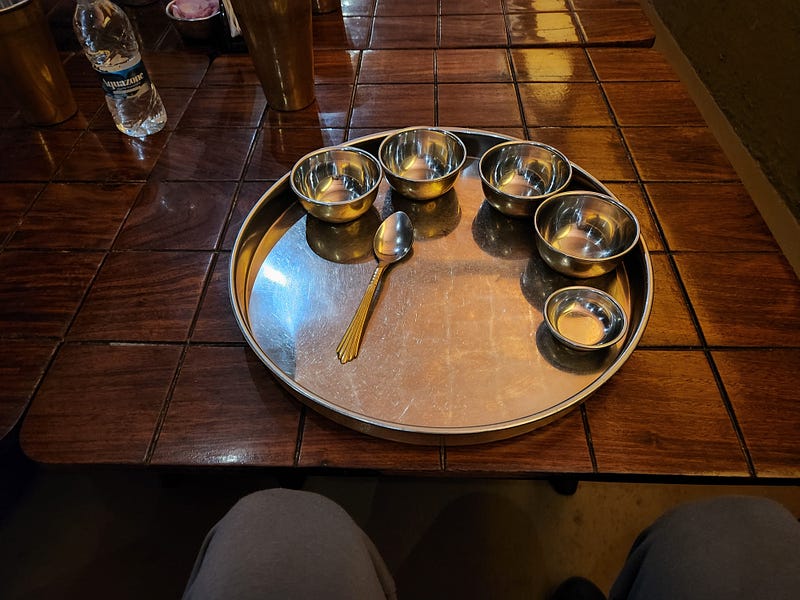
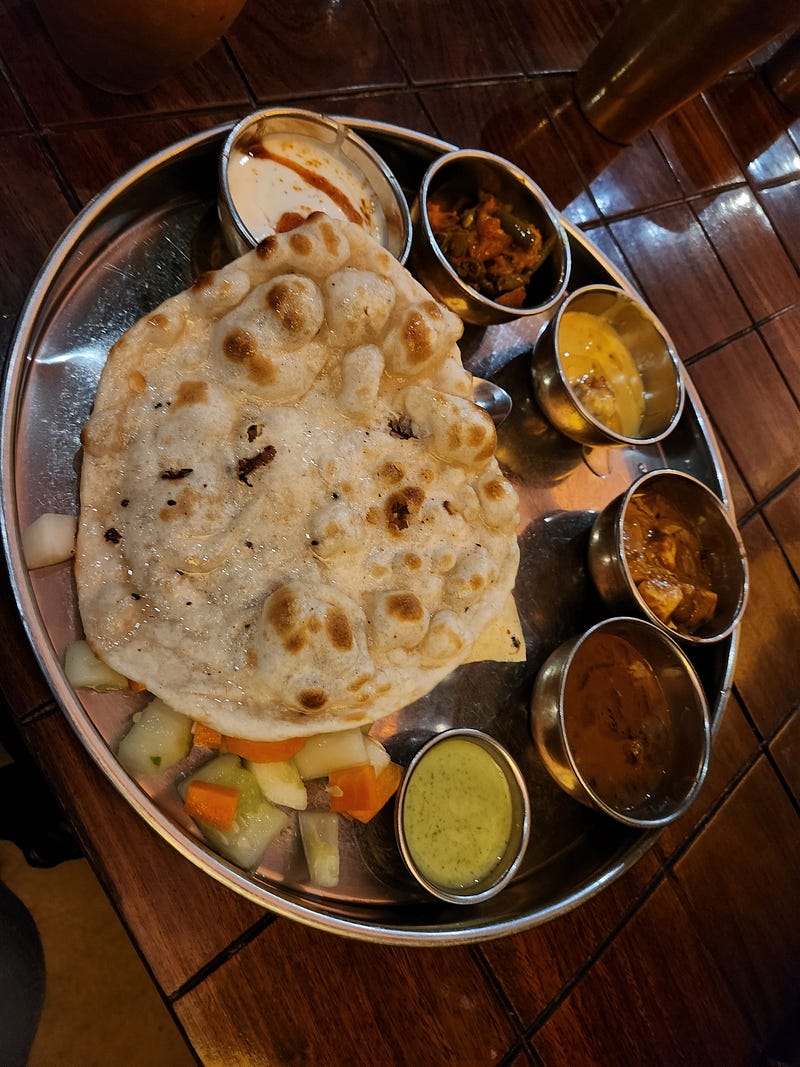
He led us to our table where we sat down low in chairs about the height of my shin. It made us look like we were squatting, which was still comfortable, though awkward whenever our knees got in the way. The food was served on a shiny thali, or a large metal platter with small metal bowls, each holding a different curry, stew, chutney, or sauce. In the center of the thali, the servers loaded our plate with mountains of rice, naan (Indian flatbread cooked in a tandoori oven), vegetables, and samosas (deep fried dough pockets stuffed with potatoes and peas).
What surprised me most at this dinner was the Punjabi treatment after all the food was served. One of the servers came by with a ladle of the most clarified golden liquid I had ever seen and drizzled it across everything on our platters. The rich, decadent, silky butter pooled on the tops of each bowl and made the naan glisten under the glow of the warm lantern lights. I had never seen butter served this way, with the exception of my favorite movie theater popcorn.
While the food was heavenly, I was so excited about all the delicious smells from the nearby chaat stands that I still hankered to go back outside to see what other tasty opportunities awaited around the park.
By the time we’d finished eating and stepped outside to take a quick spin around the park, news of the buttery dinner reached my brain and I no longer had an appetite for chaat; I contented myself with watching the locals enjoy them. Lines of locals waited for golgappa, also known as pani puri, which are bite sized deep-fried semolina dough filled with a sweet, savory, herb-flavored water; the experience of eating these is like chomping on a small water balloon that explodes in your mouth. Ladies dressed in colorful saris cooking flatbread in traditional ovens served with tins of pickles, chutneys, and curry. The aroma of spices swirled in the air, making me wish I had a second stomach. I made a mental note that if we ever returned to this part of the world, to save some room to gorge chaat at Rangla Punjab.
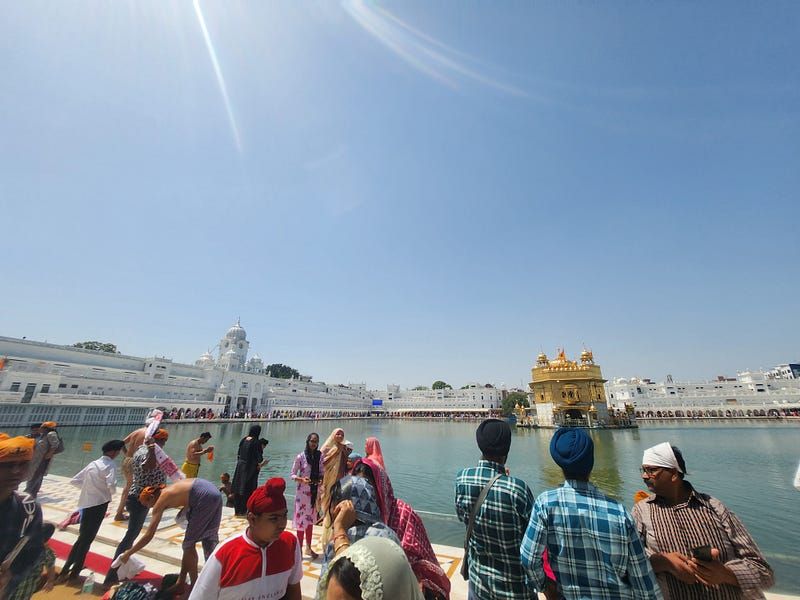
The next morning, we took a car ride further north to Amritsar to visit the Golden Temple, which is located in the center of the city and is like Makkah (or colloquially, Mecca) for Sikhs. It is their holiest gurdwara, or place of worship. The Sikh religion is intriguing in how much they emphasize equality. Women are treated with equal rights, perhaps even revered as the better sex. That’s something I can definitely get behind!
They are also incredibly welcoming to other religions. Every gurdwara has a langar, a volunteer, community kitchen serving free meals to anyone, no questions asked. Free meals happen every day! I was so touched by their generosity and sense of community. Anyone can volunteer at the langar, and indeed, we overheard other guests at our hotel speaking fondly of their experience serving meals in the kitchen. Unfortunately, our schedule only allowed us to tour the Golden Temple itself.
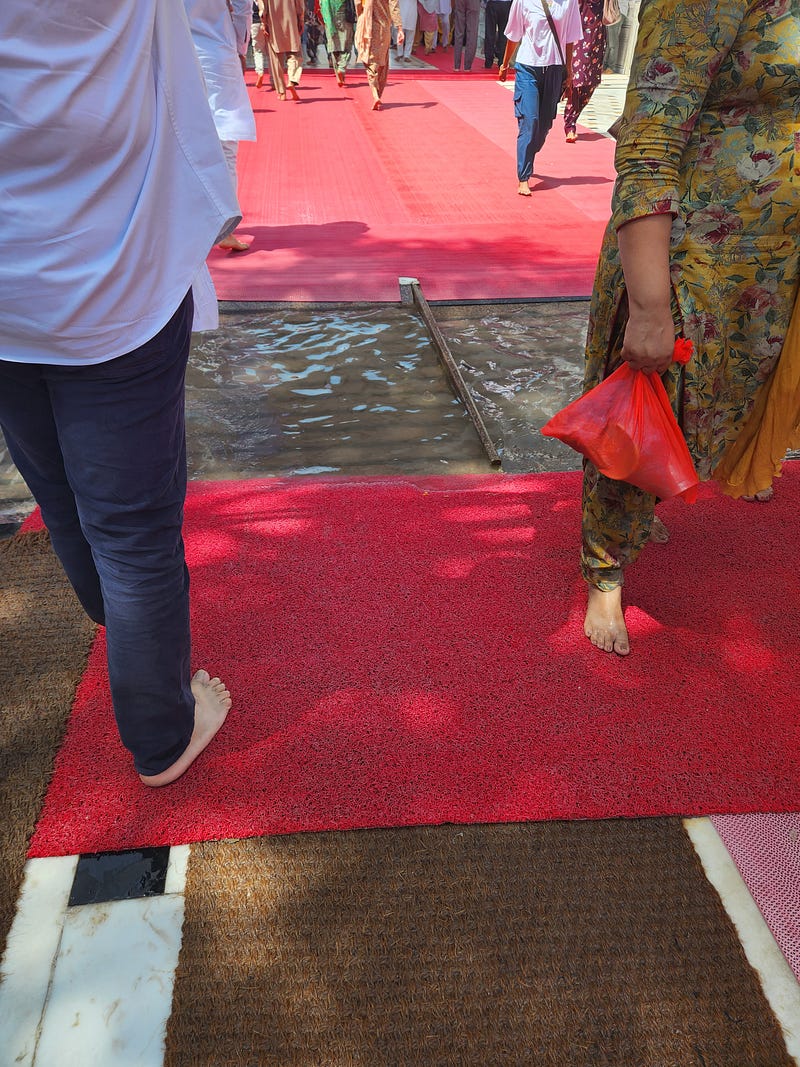
To enter the grounds of the temple, there were a few requirements. Everyone must cover their hair, remove shoes and socks (go barefoot), and wash their feet before entering. I wasn’t sure if I could last walking barefoot for an hour. The day was warm and the sun was beating down hard, which made the black pavement sizzling hot. Roads in India are also a cacophony of cars, tuk-tuks, pedestrians, cows, dogs, and everything in between. I was staring at the ground the entire time to find cooler, lighter-colored ground and avoid sharp objects that could puncture my feet.
Once we got to the entrance of the inner square, we had to walk through a trough of water to wash our feet. With thousands of visitors that day all walking through the same water, I wasn’t so sure how clean our feet were actually getting. Honestly, it felt a little gross, but when in Rome, do as they do. *shrug*
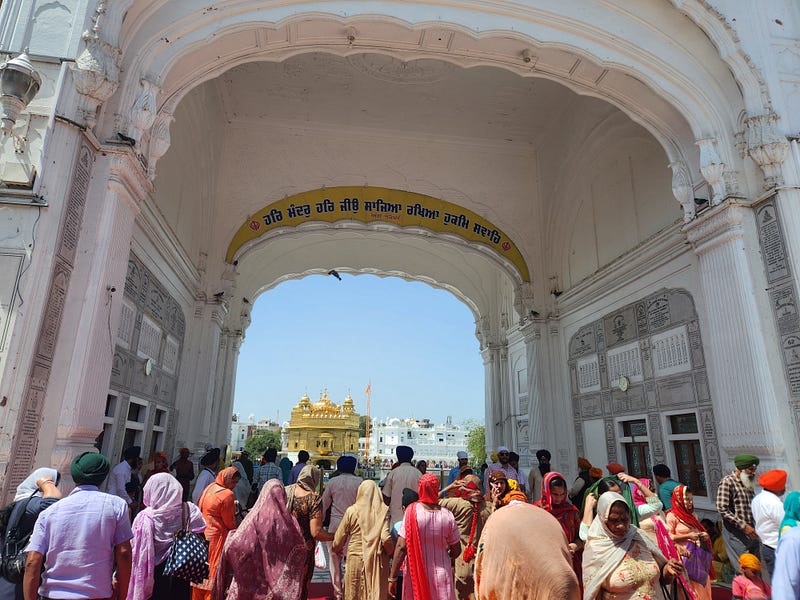
Inside the inner square, the stunningly gilded temple stood at the center of Amrit Sarovar — their sacred pond containing the ’nectar of immortality’ — where the devout bathed (in their clothes) to gain spiritual blessings. The ground was paved with white marble with colored stone inlay, reminiscent of the Taj Mahal. Despite the beauty surrounding me, I was sadly still distracted by the fact that I was walking barefoot, certain that I’d step on something and hurt myself.
At the opposite end of the entrance was a bridge that led to the holy temple. There was an immense crowd packed tightly, lined up to enter and receive bowls of holy water from the pond. I thought to myself, “I sure hope they don’t drink that.” I didn’t find any evidence that they did, but I also wasn’t sure what they did with it. After gazing at the marvelous architecture for some time, it was time to head back to our protective footwear, which I was eager to do.
The next day, locals recommended that we visit the Attari-Wagah border, where India and Pakistan jointly conduct ceremonial military drills to show goodwill and cooperation between the two countries. I was not particularly keen on this ceremony, but I was happy to oblige, until we looked up what it was all about and saw that the U.S. State Department rated the region a Level 4 Do Not Travel, the same level they rate Ukraine and North Korea.
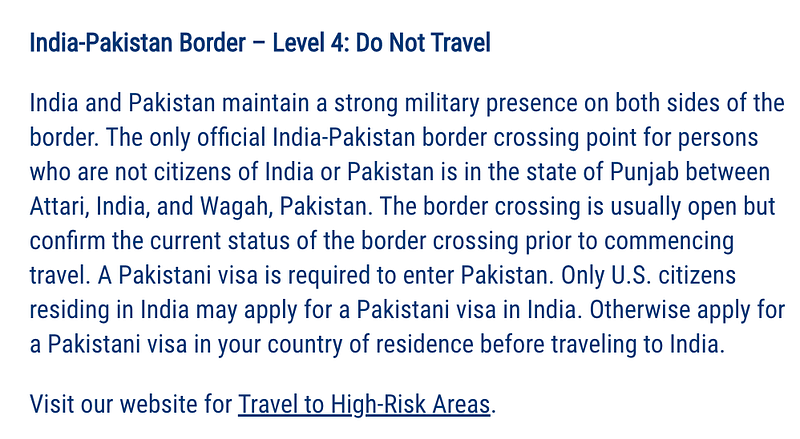
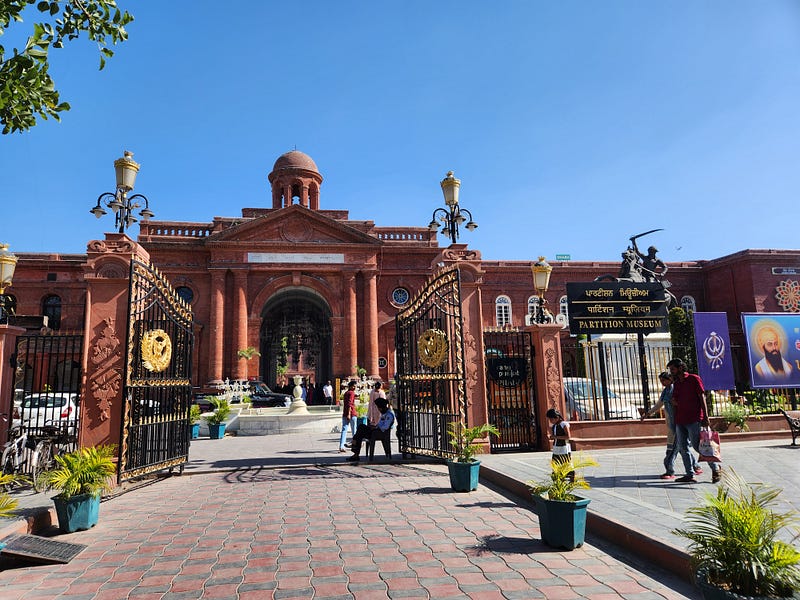
I was flabbergasted. I couldn’t believe we were about to walk into such a dangerous zone! Or was this being overly cautious? Better safe than sorry in my opinion. It was one thing if we blended into the crowds, but it’s another thing altogether when we stuck out like flashing neon lights. With that, it was decided. We’d pass on the border ceremony and spend our last day at the Partition Museum in town, where we learned the bloody history partitioning India and Pakistan in 1947.
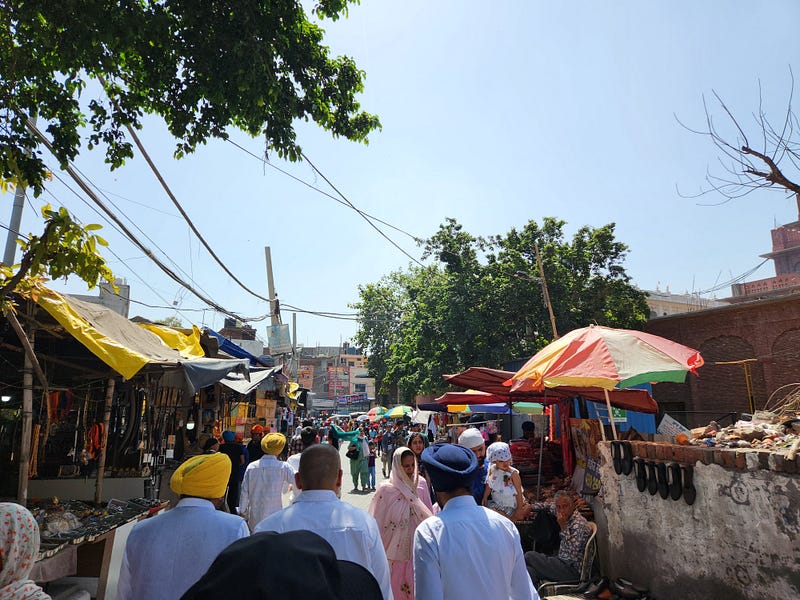
My favorite part of Amritsar was walking in the midst of locals shopping, eating, and having a great time. It was so unlike the more tourist-y parts of India, like the Taj Mahal, and it felt special to be the only foreigners in that ocean.
It’s for this reason that I recommend visiting Amritsar over the Taj Mahal. You can truly feel immersed in another world. You’re made to experience things that are unimaginably different, like the kindness and unquestioning generosity of the Sikhs and their langars, or surviving on an hour-long walk in a hot city barefoot. It’s experiences like these that show what kind of traveler you are, and what you want to get out of your trip. Anyone can be a tourist, but to explore outside of your comfort zone and go where you never thought you’d go before? That’s what makes a journey truly unforgettable.