Raj Kachori
Have you ever had a dish haunt you? I can’t describe my obsession as a simple craving, because it is so much more than that. The moment I…
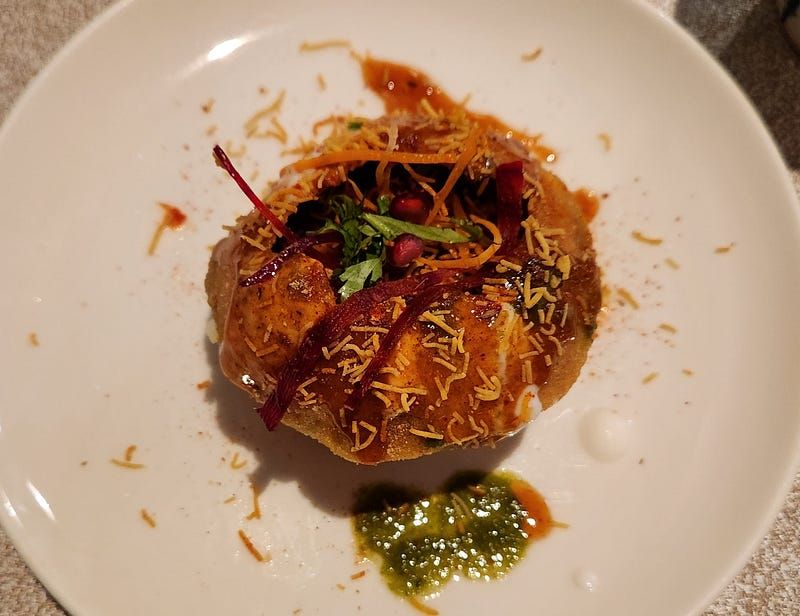
Have you ever had a dish haunt you? I can’t describe my obsession as a simple craving, because it is so much more than that. The moment I had my first bite of raj kachori — the king of kachori, my world suddenly shrank. I had tunnel vision and all I could think of was “how do I get more?” As I sat there with chutney running down my fingers, I couldn’t pay attention to any form of conversation with my husband, because I was so absorbed in the experience. The only words I could manage was, “you have to eat this!”
Even now, I can’t seem to shake the thoughts of its explosive flavors. Raj kachori is a spellbinding Indian deep-fried snack filled with potatoes and chickpeas. It doesn’t sound mind blowing at all and I’m usually not even a fan of whole chickpeas, but they’ve been able to elevate such boring ingredients to magnificence.
Well before our trip, I knew I loved chaat, snacks sold on the streets of India. Chaat comes from the Hindi word “chatna,” which means “to lick one’s finger.” In Northern California, there was only one place I knew that sufficiently satisfied my chaat cravings, and that was Vik’s Chaat House in Berkeley.
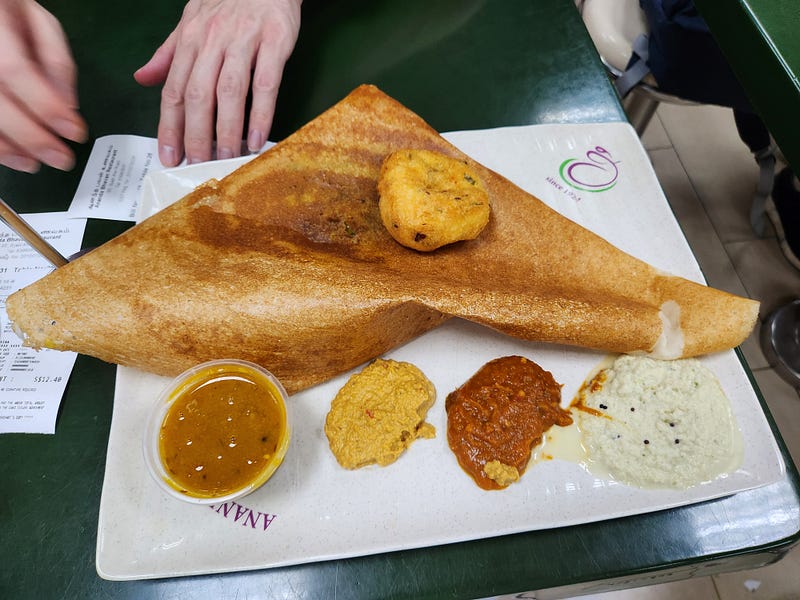
My cousin first introduced me to chaat and the humble dosa (sometimes spelled thosai), a wafer-thin crispy crepe, most often stuffed with perfectly cooked spiced potatoes or paneer (an Indian cheese), and served with chutney and sambar — a tangy vegetable stew. The key with dosa is to eat it hot, just as it is served. You’ve got to catch the crispy texture before it gets too soft and cold. At the right moment, eating dosa is a divine experience.
With all of this background knowledge, I thought I knew Indian food until I arrived in Delhi. How wrong I was. I was confidently unaware of what I didn’t know; a sign of a true idiot. Truth was, I had only eaten the tip of the iceberg. India has such a diverse culinary culture; it might take a lifetime to fully appreciate it. Before this month, I had no idea what labrador curry was. What’s halwa? Petha? Vada pav? Sev? No Indian restaurants in America prepared me for the plethora of dishes I encountered in Delhi, Agra, Jalandhar, and Amritsar.
While I enjoyed everything I ate in India, one dish sticks to me like salted caramel — the raj kachori. I dream of raj kachori, and I wouldn’t have had it if we didn’t decide to splurge a little and stay at the Shangri-la in New Delhi. Their highly rated buffet was somewhat pricey, but worth every penny.
It was one of the most decadent buffets we had ever experienced, with stations of cuisines from all over the world: Italian, French, Japanese — even a patisserie station! Since this was the heart of India, it also had dedicated curry and chaat stations. I couldn’t decide what to get from the chaat station, so I asked the kind young woman in charge of chaat to make one of everything for me. The service was impeccable, and as each chaat dish was completed, a waiter brought them over.
The only dish I was really familiar with from the station was pani-puri, a bite size puff ball of deep fried semolina dough filled with sweet, tangy, savory water (pani literally means water in Hindi). The two other chaats that came out were complete mysteries.
The first one looked like a giant pani-puri, but as soon as I bit into its crunchy exterior, I had heart-eyes reminiscent of an enamored Pepé le pew.
This was definitely not pani-puri. Instead of flavored water, this oversized puri (which literally means deep-fried bread) was stuffed with milk curd, potatoes, chickpeas, and yogurt, then drizzled with dazzling colors of green and red from the mint and tamarind chutneys. To top it off, the entire affair was sprinkled with an assortment of fixings, from spices, onions, fresh coriander, to sev, a spicy, crunchy broken-up noodle snack commonly made of potato and chickpea flour. Like a teenage boy crushing on the cute girl walking by, I immediately turned around to ask for the name of the chaat giving my mouth an orgasm.
The young chef who constructed the Taj Mahal of chaats blushed when I complimented her skills. When I asked her for the name of the chaat, she said what sounded to me like “Raja paturi.” Under her heavy accent, I had trouble spelling it in my head. I asked her to repeat it over and over, until it got awkward. “Raja paturi,” “Raja paturi.” I thought I had it down. For the next few days, I scoured the internet for raja paturi with zero luck. My heart sank. Did I lose my chance forever? Every consecutive day after my chaat awakening, I thought about raja paturi. I was determined to find out everything I could about it. I wanted the recipe, and I wanted to eat unlimited quantities of it.
As a young girl, I was deprived of a lot of birthday cakes, because my family didn’t eat eggs due to their religion; and cakes, as you know, usually contain eggs. Consequently, I grew up to be an obsessive home baker, because subconsciously, I think I was trying to make up for all the birthday cakes I missed out on. So, when it comes to will and determination to eat good food, I will go to the ends of the Earth to satisfy my desires. I never take “no” for an answer. I started to download every well-rated cookbook on chaat, and luckily, after realizing that my ear wasn’t attuned to Hinglish (we thought our friends recommended a Rajasthani theme park called Caulk ’n Honey, when they were actually saying Chokhi Dhani), I found the true name and a recipe of that sexy dish: raj kachori. Raj literally means king and kachori is a type of deep-fried dough with sweet or savory filling. It’s a dish from Rajasthan, and the best place to find it is at train stations and food markets of Jaipur, or … my kitchen.
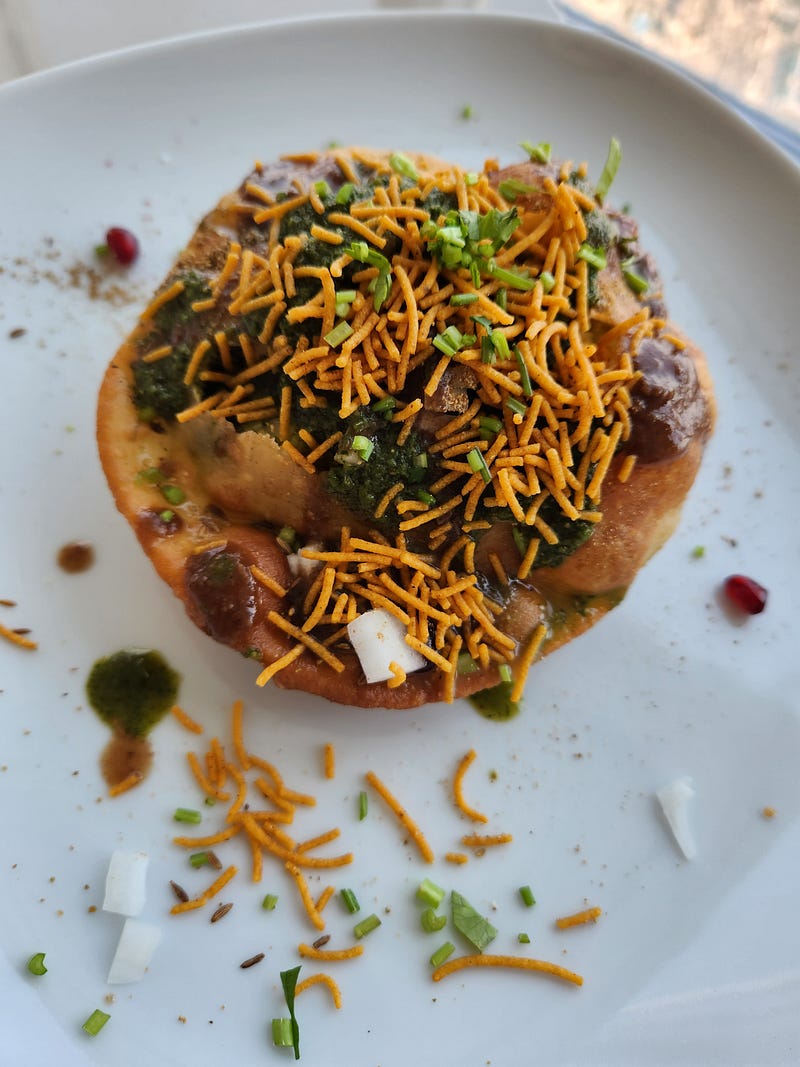
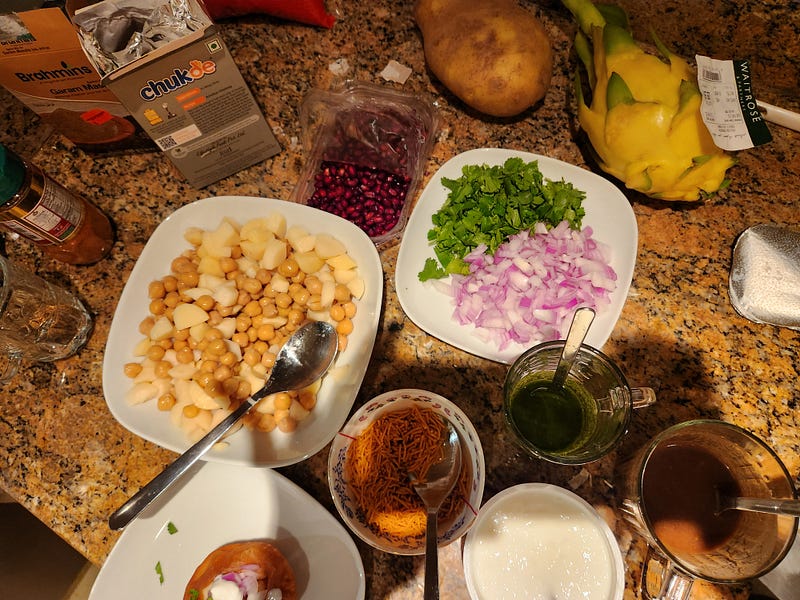
In anticipation of the kitchen battle I would stage, I made sure I brought home from India: a sack of sev, tamarind paste, and amchur powder–dried mango powder, which would be sprinkled on top. I drafted a list of all the fresh ingredients I needed on the flight home, and as soon as we touched down, I immediately went to work on the chutneys and kachori dough, which was a simple dough made of all-purpose and semolina flour, leavened with baking powder. While the recipes were straightforward and easy, the deep frying of the kachori took some trial and error. At first, the dough wouldn’t predictably puff up fully until we –my husband was my sous chef– realized that the temperature of the oil was key. The oil needed to be very hot and as soon as the dough entered the oil, it should puff up immediately. If it struggled, you can try to flip it to salvage the dough before it got too stiff to inflate. Once the mise en place–French for preparation– was complete, we had a glorious Indian version of taco night which only lasted us two days, too soon in my opinion.
Weeks later as I write this post, I still think of raj kachori. I still desire its sweet, tangy, savory, spicy amalgamation of flavors. It’s a pity it’s not a chaat more commonly offered outside of India. The closest dish I’ve been able to find that emulates it is dahi puri, but still nothing beats the king, raj kachori. If I ever find a better chaat, you’ll be the first to hear it, and if you like a chaat more than raj kachori, you need to tell me in the comments below!