Salt Sandspurry (세발나물)
Which region has the longer coastline, California or South Korea? I’ll give you a second to guess. I was surprised to find that South Korea…
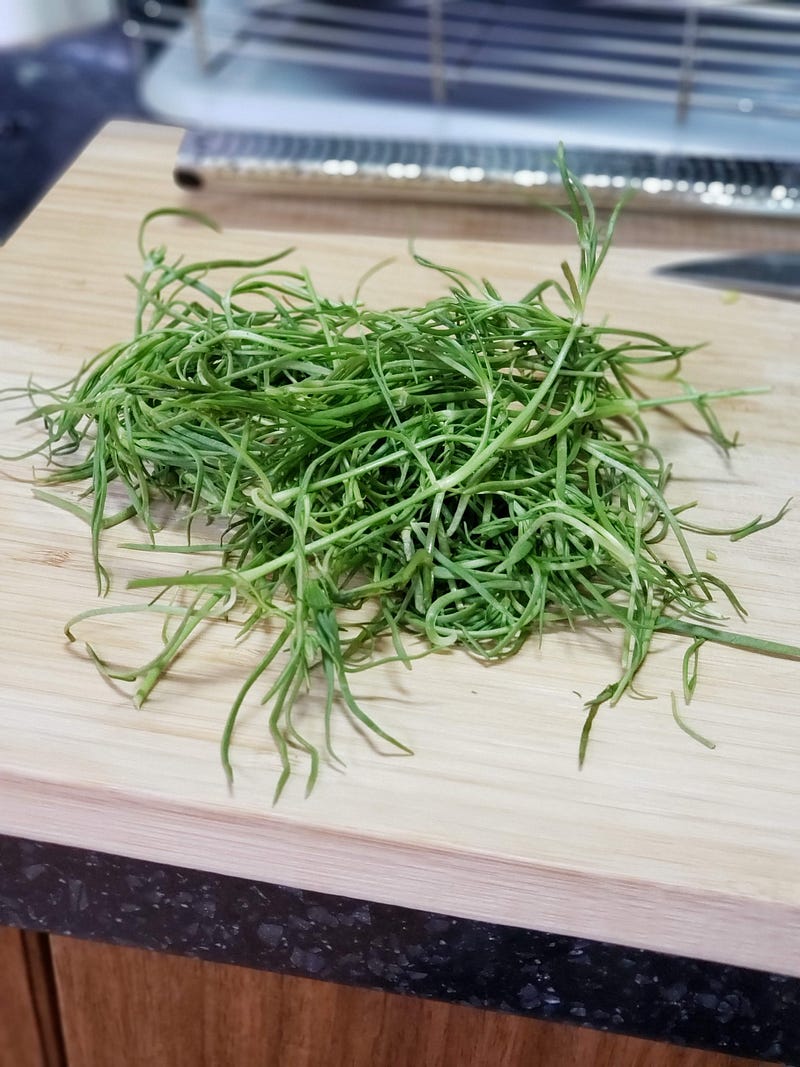
Which region has the longer coastline, California or South Korea? I’ll give you a second to guess. I was surprised to find that South Korea has 1500 miles of coastline, almost twice that of California (800 miles). This explains why so much Korean food comes from the sea, and not just bizarre marine animals like sea pineapple but also plants! Aside from gim (김 or seaweed), which is well known around the world, Koreans eat an assortment of fresh greens grown on the coast, and salt sandspurry is one of them.
Spergularia marina is the scientific name for salt sandspurry (세발나물). Well, at least, I think it is. Information was sparse on the web, and my Korean is still elementary. Salt sandspurry is a saline-tolerant plant that grows by the sea. Nowhere on its Wikipedia entry does it mention that it’s an edible plant, but the pictures look very similar to what I bought from the store. Though, I think the grocers probably pick them at a younger stage, for it looks more delicate than the one in the photo on Wikipedia.
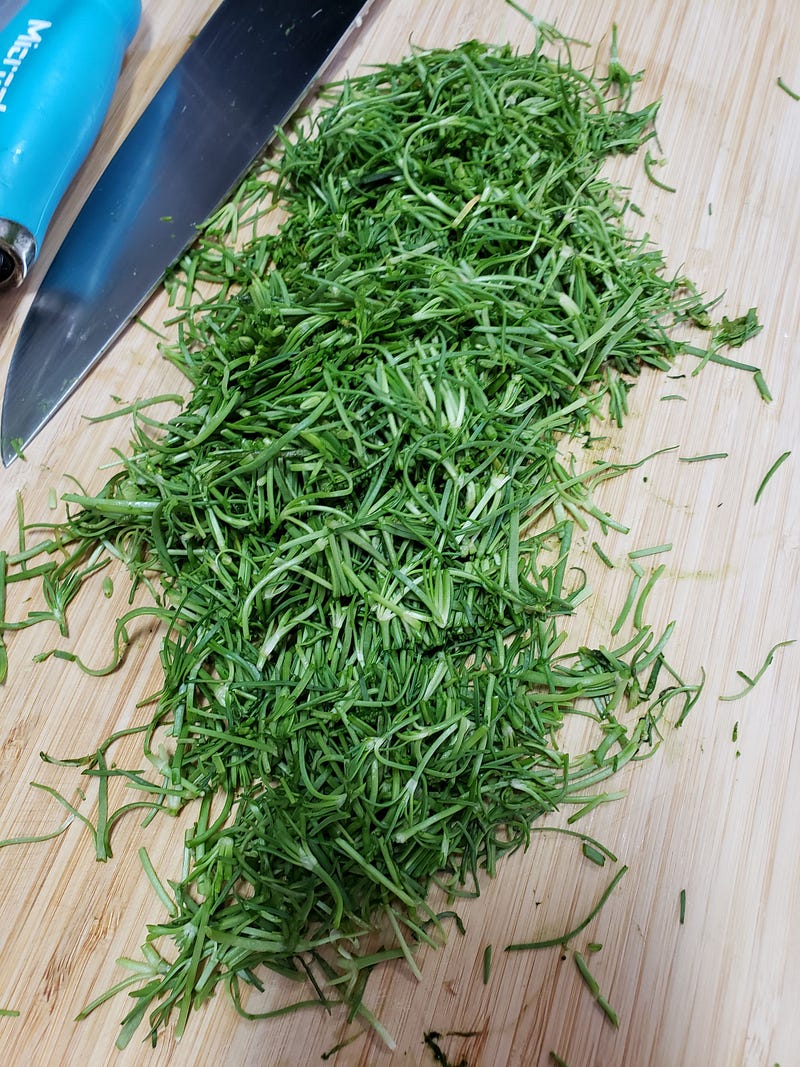
The preparation was done in the typical Korean style with garlic, soy sauce, vinegar, scallions, gochujang (a red chili paste), sesame seeds, sesame oil, and a touch of sweetness. The Korean recipe recommended a quick 15-second blanch, but since it can be eaten raw, I decided to skip that step. I felt that I could easily ruin the dainty leaves and be left with a mushy salad.
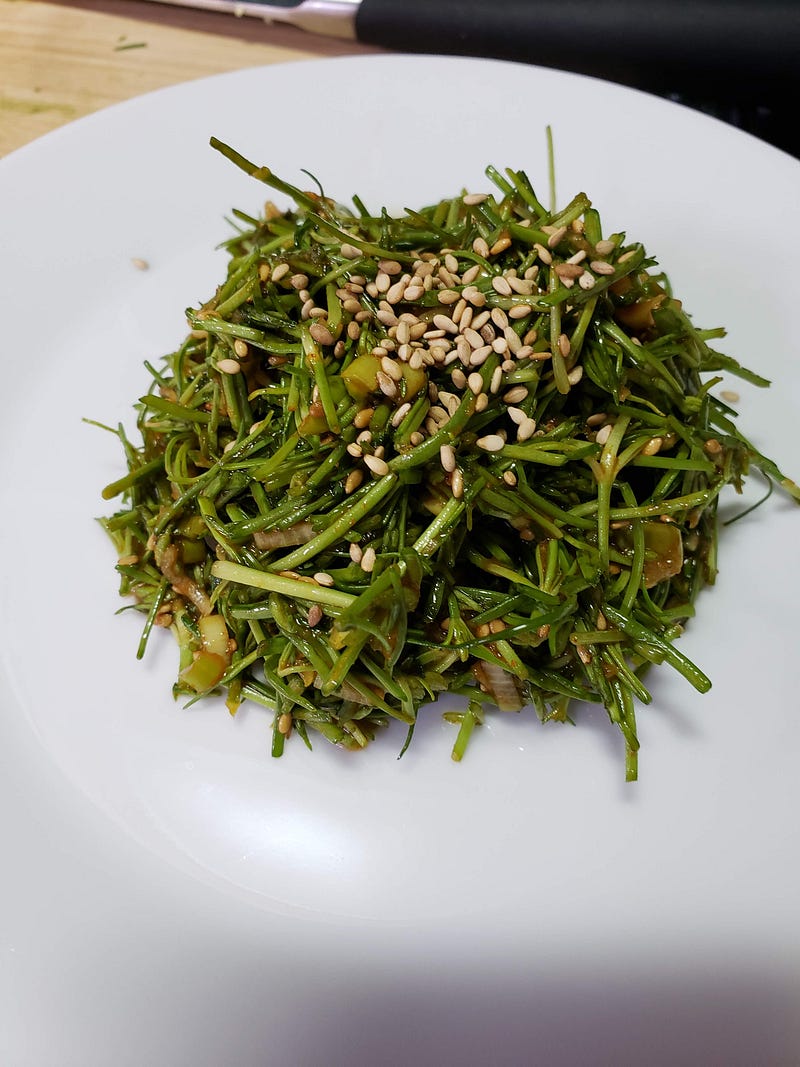
The resulting dish was a fresh spring salad. Its texture was like fresh dill or fennel, but it had none of the strong flavors of those herbs. It tasted like a sunny day on the beach with the ocean breeze blowing in your face. It was light, delicate, and mild. I think the texture was the most distinctive part of the plant, so I’m glad that I didn’t blanch it. Though I am curious about how it would’ve turned out if I had followed the instructions. You never know with these seaside plants. They can be surprisingly resilient. It was a delight to make. Fast and easy, too. Who said it would be hard to be vegetarian in Korea? You’ve just got to be a little adventurous and curious!